Türkçe


Pack light and use a soft bag for a boat holiday. The essentials are: 2–3 swimsuits, light and light-coloured clothes, a thin sweatshirt for the evening, non-slip flip-flops or water shoes, high-factor and ideally reef-safe sunscreen, a hat, polarised sunglasses, seasickness tablets, personal medication, a power bank and a waterproof phone case, plus your ID or passport. Bed linen, towels, life jackets and basic kitchen equipment are provided on most charter boats. High heels and hard-shell suitcases cause problems on board.
Boat Holiday Packing List (Summary)
| Category | Must bring | Note |
|---|---|---|
| Documents | ID / passport, booking confirmation | Passport and visa needed to cross to the Greek islands |
| Clothing | Swimwear, shorts, T-shirts, linen shirt, thin sweatshirt | It gets cool at sea in the evening |
| Footwear | Non-slip flip-flops, water shoes | Outdoor shoes are not worn on deck |
| Sun protection | SPF 50 sunscreen, hat, polarised sunglasses | The sea reflects sunlight |
| Health | Seasickness tablets, personal medication, plasters | A first-aid kit is kept on board |
| Electronics | Power bank, waterproof case, charging cables | Sockets on board are limited |
| Sea gear | Personal mask and snorkel | Many boats also carry shared sets |
| Luggage | Soft bag or foldable holdall | Hard cases do not fit in cabins |
Clothing: Light, Minimal and Quick-Drying
Storage space on a boat is limited, so the rule is "less, but useful". Two or three swimsuits, shorts and light T-shirts are enough for the day. A thin long-sleeved linen shirt or a UV-protective top is very useful against the sun. Light colours keep you cooler and suit the airy feel of a boat.
In the evening, especially at sea and in windy bays, it can get cooler than expected, so pack a thin sweatshirt or light windbreaker. One or two smart-casual outfits are enough for dinner at bay-side restaurants. Quick-drying fabrics make a big difference in humid sea air.
Footwear: Protect the Deck
On most boats, outdoor shoes are not allowed on deck because teak scratches and becomes slippery. People go barefoot or wear non-slip, non-marking flip-flops. A pair of water shoes protects you from sea urchins in rocky bays, and light trainers are enough for walks ashore and ancient sites. Leave high heels at home.
Sun Protection
Because the sea reflects sunlight, the risk of sunburn is higher on a boat than on land. Choose SPF 50 sunscreen and reapply every two hours, especially after swimming. Reef-safe sunscreens without chemicals that harm marine life are the better choice. A wide-brimmed hat and polarised sunglasses protect your eyes and cut the glare on the water so you can see the sea more clearly. Pack some aloe vera gel for burns too.
Health and First Aid
Charter boats are legally required to carry a first-aid kit. Still, bring a small bag for your personal needs:
- Seasickness tablets or wristbands: bring them even if you have never been seasick. Tablets work best taken before setting off.
- Personal medication: enough for a few days longer than your trip.
- Painkillers and stomach remedies
- Mosquito repellent: useful in wooded bays in the evening.
- Plasters and antiseptic: for cuts from rocks and shells.
Electronics
Power on board comes from a generator and batteries, so the number of sockets and hours of use may be limited. A power bank, USB charger and long cable are very useful. Protect your phone with a waterproof case. Bring an action camera for underwater shots and a drone for scenery if you like, but respect no-fly zones and the privacy of guests on other boats. Keep Bluetooth speakers at a volume that does not disturb neighbouring boats in the bay.
What Is Usually Provided on Board
| Item | Gulet / skippered boat | Bareboat sailboat / catamaran |
|---|---|---|
| Bed linen | Yes | Usually yes |
| Bath towels | Yes | Usually yes |
| Beach towels | Mostly yes | Varies by boat |
| Life jackets and safety equipment | Yes | Yes |
| Kitchen equipment | Yes (with a cook) | Yes |
| Snorkel sets, SUP, kayak | Depends on the boat | Can be hired as extras |
Always ask what is included before booking. Our gulet charter guide explains what to check in a gulet offer.
What Not to Bring
- Hard-shell suitcases: they do not fit in cabin storage; use a soft bag.
- High heels and black-soled shoes: they damage the deck.
- Glass bottles and glasses: high risk of breakage; use plastic or metal.
- Too many clothes: you will spend most of the time in swimwear.
- Valuable jewellery: easy to lose in the sea.
Documents
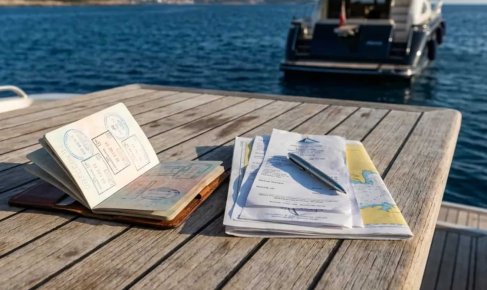
Keep your ID or passport with you; your details are needed for the crew and passenger list. If you plan to cross to the Greek islands, a valid passport and, where required, a visa are essential; see our Greek islands crossing guide. For a bareboat charter you will need a licence suitable for the boat's length; current rules are in our boat licence article.
Frequently Asked Questions
How much luggage should I bring?
One medium-sized soft bag per person is enough. Hard suitcases do not fit in the cabins.
Are towels provided on board?
Skippered gulets provide bath towels and usually beach towels. On bareboat charters it depends on the boat, so ask in advance.
What should I do about seasickness?
Take a seasickness tablet before setting off, stay in the middle of the boat in fresh air and look at the horizon. Catamarans do not roll as much, so they are more comfortable for people prone to seasickness.
Can I bring my own food and drinks?
On most charters, yes. On skippered gulets it is best to agree the menu and drinks package in advance.